



Atonement and Its Continuing Significance
- sharingvillageone
- Sep 30
- 3 min read
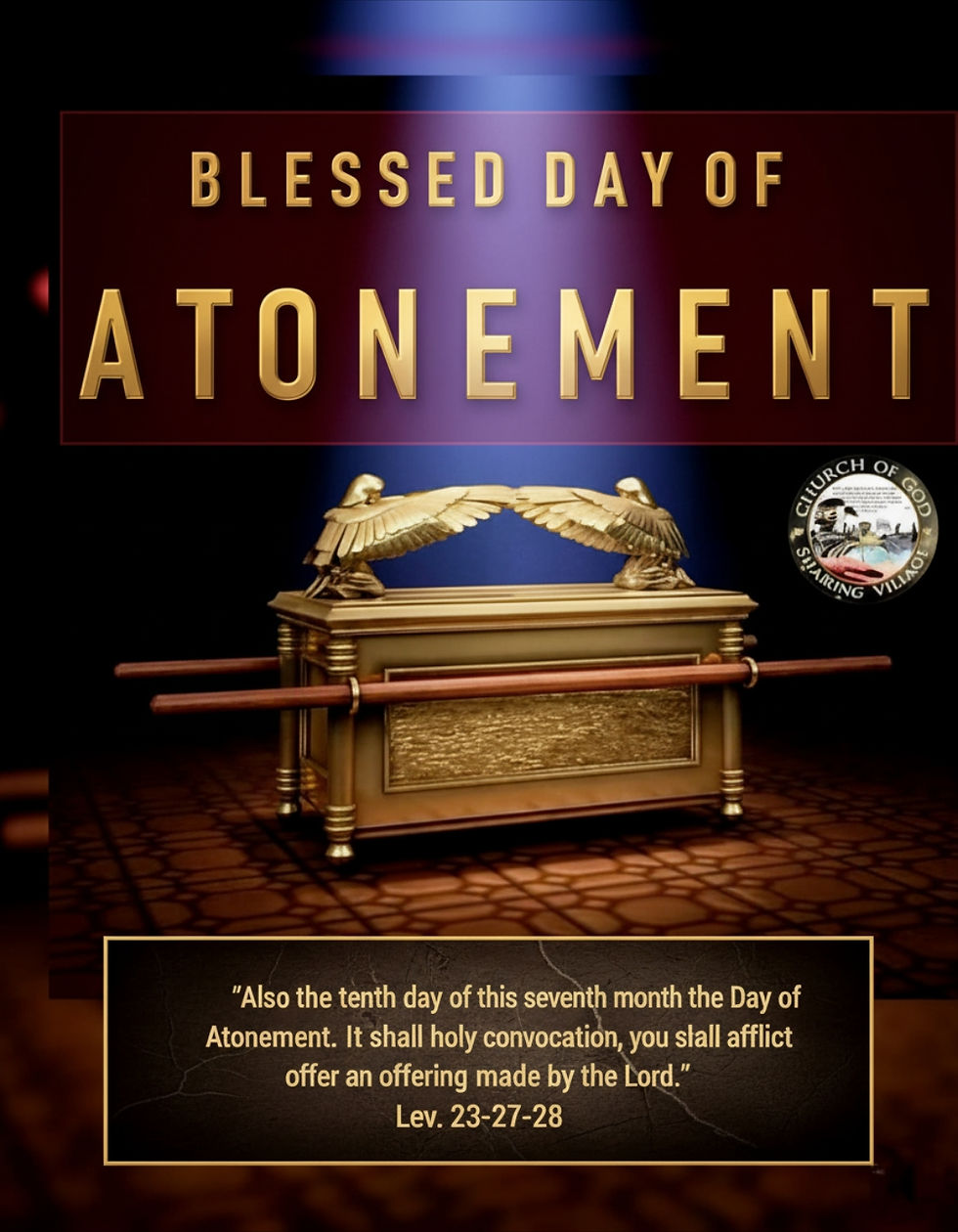
The Day of Atonement—known in Hebrew as 'Yom Kippur'—is perhaps one of the most unique and solemn festivals in the Bible. Unlike other feasts that include rejoicing, music, and shared meals, Atonement is set apart as a day of humility and fasting.
God commanded His people to abstain from food and water for twenty-four hours, a complete fast from “evening to evening” (Leviticus 23:32). It is observed once each year, and in 2025 it falls on October 2, beginning at sunset the evening before.
From ancient times, this day carried deep meaning. In Leviticus 16, God gave instructions for the high priest to first make atonement for his own sins and then for the sins of Israel. Two goats were chosen by lot. One was sacrificed, and its blood was sprinkled on the mercy seat in the Most Holy Place, symbolizing the covering of sin.
The other—often called the scapegoat—was sent into the wilderness, carrying away the sins of the people. These rituals were powerful pictures of God’s mercy and His promise to remove sin from His people.
Leviticus 23:27 calls this day a time to “afflict your souls.” While the phrase might sound unusual to us today, Scripture explains it as humbling ourselves through fasting. David wrote, “I afflicted myself with fasting” (Psalm 35:13).
Other examples show that biblical fasting often meant going without both food and water (Deuteronomy 9:9, 18; Esther 4:16; Acts 9:9). By the time of the New Testament, this holy day was so strongly associated with fasting that it was simply referred to as “the Fast” (Acts 27:9).
But fasting on Atonement is not merely about physical denial. It is about directing our attention away from the demands of the body and toward the eternal purposes of God. By going without, we are reminded that “man shall not live by bread alone, but by every word that comes from the mouth of God” (Matthew 4:4).
Atonement is also a day for reconciliation. As we seek God’s forgiveness, we must also extend forgiveness to others. Jesus taught that if we do not forgive, neither will our heavenly Father forgive us (Matthew 6:15).
Thus, Atonement calls us to examine our hearts—not only before God but also in our relationships. It is a solemn day, but not a hopeless one. Rather, it is filled with the joy of cleansing, renewal, and peace through God’s mercy.
The very word atonement means “to cover” (from the Hebrew 'kaphar'). In the Bible, it carries the sense of making amends, redemption, or reparation. Through atonement, the penalty of sin is covered so that reconciliation with God can take place. Yet the sacrifices of ancient Israel could only point forward to the greater reality.
As Hebrews 10 explains, the blood of animals could never fully remove sin. Only Jesus Christ, our High Priest and perfect sacrifice, could provide the ultimate atonement—one that cleanses the conscience and restores fellowship with God.
Prophetically, the Day of Atonement also points to end-time events. It looks forward to the final judgment after the return of Christ. Revelation 19 portrays the Marriage Supper of the Lamb, when the Bride—the Church—is presented to the Father. Immediately after, Revelation 20 describes the binding of Satan, when the great deceiver is removed from influencing the nations. Atonement thus reminds us of the coming time when evil will be restrained, and God’s people will dwell in peace.
This day is also linked to the Jubilee. In ancient Israel, every fiftieth year was announced by the sounding of the trumpet on the Day of Atonement (Leviticus 25:9–12). Debts were forgiven, slaves were set free, and families returned to their ancestral lands.
What a beautiful picture of release and restoration! In the same way, God promises ultimate liberty for His people through Christ—a freedom from sin, bondage, and spiritual debt.
The Day of Atonement stands as a yearly reminder that we cannot cleanse ourselves. We depend entirely on God’s mercy, forgiveness, and the sacrifice of His Son. It is a call to humility, repentance, and renewed dedication. And it points us to the glorious hope of a world made new, when every debt will be canceled, every tear wiped away, and everyone fully reconciled to God.


Comments